

6 minutes
Every day, hundreds of thousands of decisions are being made across an airport. Passengers are looking for gates, navigating security, and checking for flight updates, while airport teams coordinate airlines, security, baggage operations, and terminal services in a constantly changing environment.
When information is delayed or inconsistent, the effects are immediate. Passengers become frustrated, staff spend more time answering routine questions, and operations become less efficient.
To meet these expectations, airports need more than merely static signs. They need a central communications system that can send real-time, location-specific information to all areas, including terminals, gates, baggage claim, parking, and other spaces. A connected digital signage network helps close this gap. Through integrating with real-time operational data, digital displays become more than information boards—they guide passenger movement, improve communication, support operational decision-making, and help airports deliver a smoother, more responsive travel experience.
Where digital signage creates the greatest value
Digital signage delivers the greatest value at the times that matter most—when passengers need clear, timely information to make their next decision and airport teams need to communicate quickly across multiple locations. Rather than functioning as a collection of standalone displays, a connected signage network becomes an extension of airport operations, automatically delivering relevant information in response to real-time events.
- Passenger wayfinding: Airport terminals are large, multi-level facilities. Digital signage can help travelers navigate terminals more efficiently, find gates, manage connections, and locate services through real-time wayfinding and facility information.
- Operational updates: Digital screens are one of the quickest and most effective ways to share flight status, gate updates, baggage information, security wait times, and transportation updates with large volumes of travelers.
- Disruption response: Leverage digital signage to provide consistent communications during delays, weather events, construction, emergencies, and other unexpected situations.
- Passenger engagement: Digital screens support accessibility, visual paging, commercial messaging, and a more personalized airport experience.
With connected signage, updates are automatically applied, ensuring the right information is displayed on the right screens at the right time. This reduces passenger uncertainty, reduces repetitive staff questions, and helps airports operate more efficiently.
Power every screen with real-time data
Data integration is key to an effective airport digital signage network. By linking screens to operational systems, airports can automate messages for passengers at every step of their journey.
Key data sources to integrate with digital signage include:
- Flight information and Airport Operational Database (AODB) systems for arrivals, departures, gate assignments, boarding status, delays, and aircraft changes.
- Security queue analytics can be used to display estimated wait times and direct passengers to less-congested checkpoints.
- Wayfinding and maintenance systems help passengers navigate terminals, gates, baggage claim, lounges, accessibility services, and temporary routes during construction.
- Baggage handling systems provide key information for carousel assignments, estimated delivery times, locations for oversized baggage, and updates on delayed baggage.
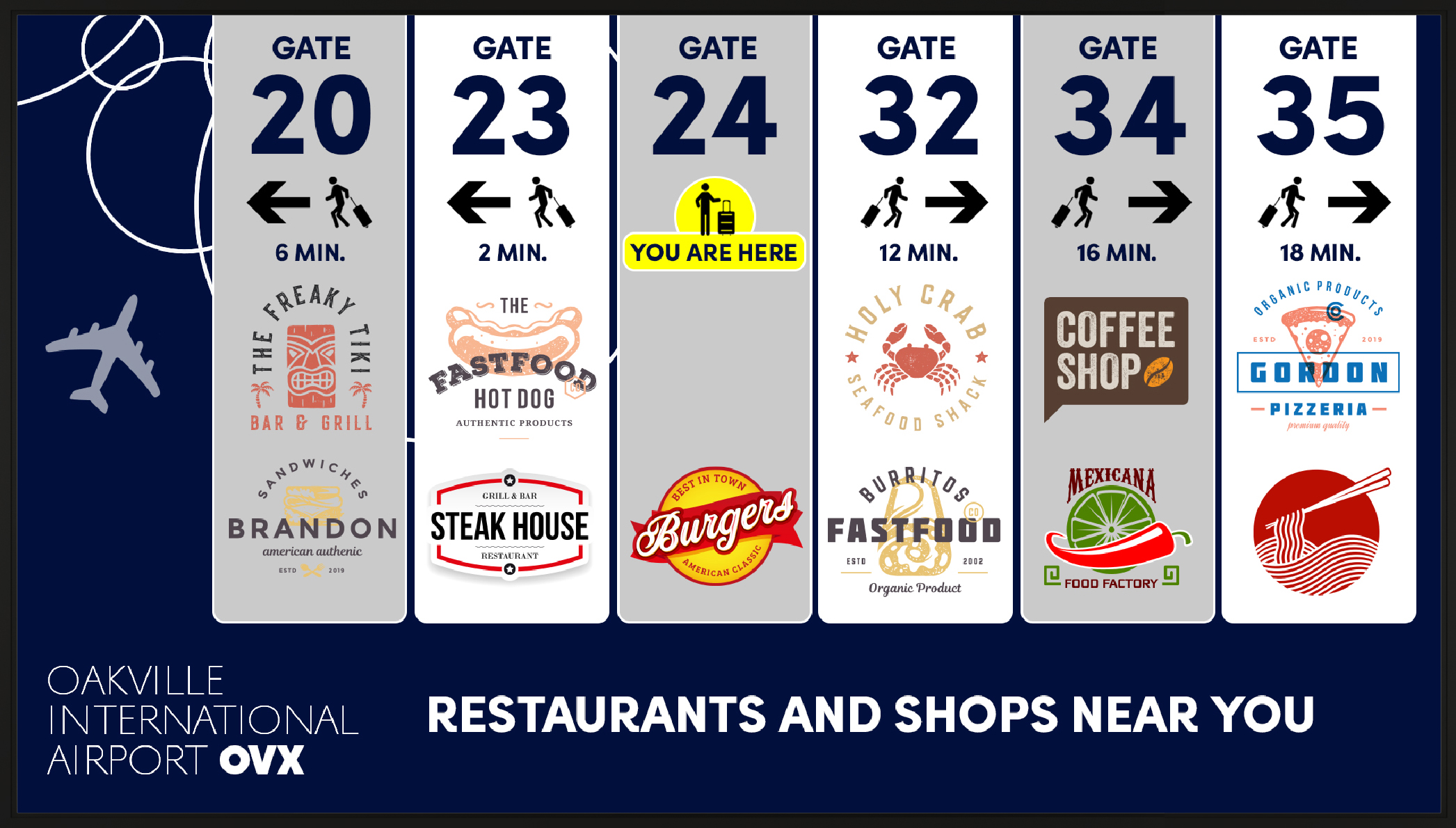
Additional integrations with parking systems, public transit, shuttle services, ride-share locations, weather services, and roadway conditions extend communications beyond the terminal itself.
A steady flow of timely, accurate information boosts passenger confidence and helps airport operations run more smoothly.
Supporting every stage of the passenger journey
Digital signage adds value throughout the airport, but its biggest impact comes at the moments when passengers need to make a decision.
The journey often begins before travelers even reach the terminal, with roadside and parking screens directing them to the right entrance or available parking. Inside, welcome displays help orient passengers, while check-in screens deliver airline and counter information. From there, wayfinding displays guide passengers through security, to their gate, or on to baggage claim and ground transportation. At the gate, screens keep travelers informed with boarding updates, connection details, destination weather, and service announcements. After arrival, baggage claim displays provide carousel assignments, estimated delivery times, oversized baggage information, customs guidance, and ground transportation options.
Providing the right information at each stage of the journey helps passengers feel more confident, reduces confusion, and allows them to move through the airport with fewer delays and less reliance on airport staff.
Visual paging improves communication
Public address announcements are still important, but they don’t always reach everyone. Airports are often noisy; many people wear headphones, while some terminals keep announcements to a minimum to make the space quieter.
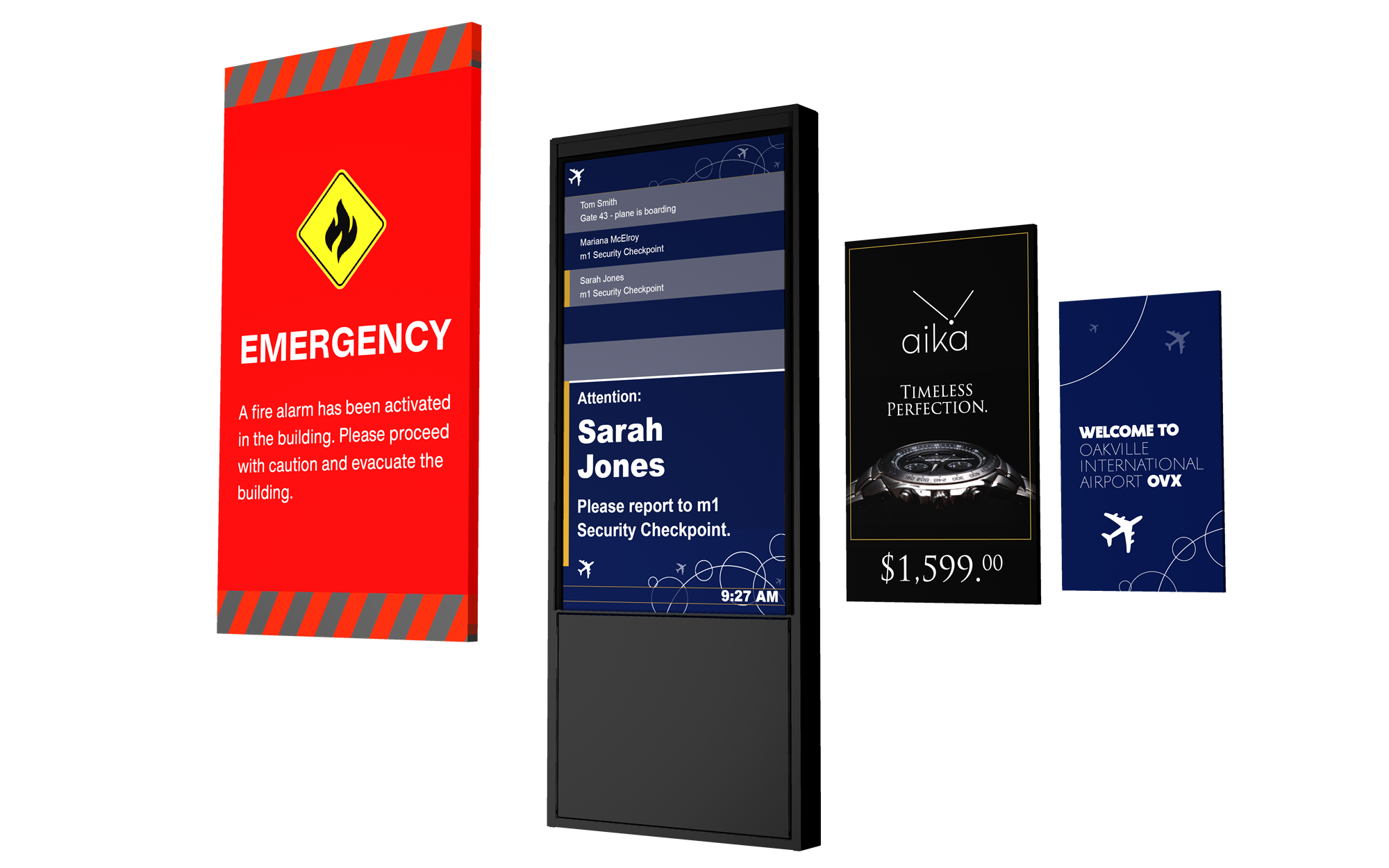
Visual paging complements audio announcements by displaying important messages on digital screens as they are broadcast. Gate updates, final boarding calls, baggage updates, service disruptions, lost-item notices, and emergency instructions can all be displayed on screens where passengers are most likely to see them.
This method makes information more accessible for people who are deaf or hard of hearing, traveling in another language, or feeling stressed. It also provides everyone with a consistent source of information, reducing confusion and saving staff time on routine questions.
Designing for every Passenger
Today's airports serve travelers with varying languages, abilities, travel experience, and technology preferences. A successful communication strategy must accommodate everyone, from business travelers to families to international visitors to passengers with reduced mobility or other accessibility requirements.
Digital signage can help everyone by using clear text, high-contrast colors, messages in different languages, easy-to-recognize icons, and clear instructions for each location. Good design makes the next step obvious, especially in challenging areas like security, transfers, customs, and baggage claim.
Digital displays work best when they complement other ways of sharing information, such as mobile apps, kiosks, staff assistance, and audio announcements. Using all these channels together makes the airport experience easier and more consistent for everyone.
Managing disruptions more effectively
A connected digital signage network is extremely valuable when unexpected issues and events occur. Weather delays, gate updates, long security lines, construction, baggage issues, emergencies, and security incidents can all cause confusion when passengers receive mixed messages from different sources.
Through leveraging automated rules, airports can update screens in real time, highlight urgent messages, and keep information in sync across the facilities. This decreases manual work and gives passengers a clear idea of what’s happening and what to do next. For staff, clear and consistent messages result in fewer repeated questions and more time to help travelers who need extra support.
Supporting airport operations
Passenger screens are just one part of an airport digital signage network. Digital signage also helps airport operations by giving real-time updates in control rooms, offices, staff areas, and command centers.
Operational dashboards can display metrics such as on-time performance, gate utilization, passenger flow, queue lengths, baggage handling, parking, terminal occupancy, weather impacts, and incident updates. When linked to business intelligence tools and databases, these dashboards give teams a live view to help them make quicker, better decisions. They support coordination between airport operations, airlines, security teams, ground handlers, maintenance crews, transportation providers, concessions, and executive leadership.
Every screen should contribute to the passenger experience
Digital signage is about more than just sharing information. By linking screens to data, airports can share timely and relevant messages - turning data into coordinated action. This helps passengers feel informed, confident, and supported, while also giving staff better insight and flexibility. It improves communication in both normal times and during disruptions, makes airports more accessible, helps teams make better decisions, and shapes the future of airport experiences.